The Archive keeps what the world discards. The Reliquary is where a few of those things are let back out.
Each mark below exists in the record before it exists as an object. To carry one is to hold a line in the entry of the thing you hold.
Custody cannot be sold, only handed on. What follows is the handing on.
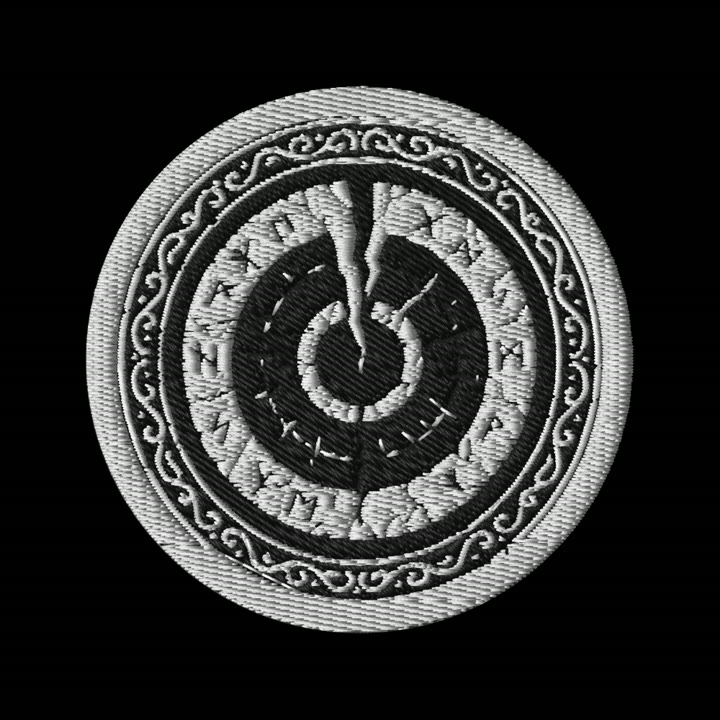
Sigil: The Fractured
The condition of a record being broken rather than incomplete. A Fracture is not a gap in the account. It is the account, in the shape the damage left it.
The Archive does not repair Fractures, and does not expect the holder to.
$17
Take it into custody
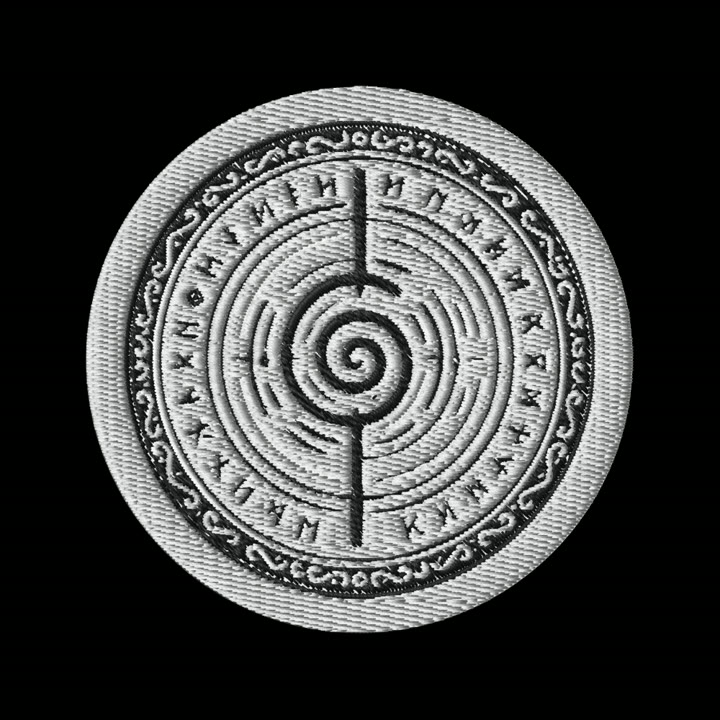
Sigil: The Witness Mark
Issued to one who has taken the binding and cannot now unsee what was set before them. Witnesses are not selected for virtue. They are selected for having been present.
The mark records the binding. It does not confer it, and returning it does not lift it.
$17
Take it into custody
Sigil: The Witness Gate
The threshold a witness passes once. The register notes the crossing and makes no provision for a second entry in the other direction.
Held by someone already through. There is no form for those who want back.
$17
Take it into custody
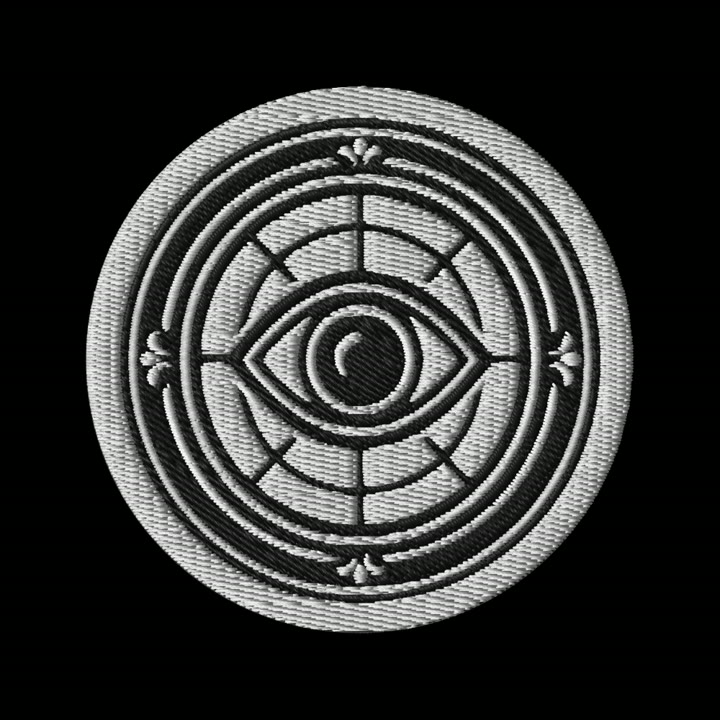
Sigil: The Observer
The one that watches and does not act. It reports the shape of what it sees and withholds the meaning, which is the whole of its office.
Whoever holds this is watched by nothing. That is not the same as being unobserved.
$17
Take it into custody
Sigil: The Threshold
Salt drawn across an opening to mark the boundary between what may be read and what stays sealed. The line is the record of a decision, not a defence.
The holder carries a boundary. They are heavier on the side they were drawn from.
$17
Take it into custody
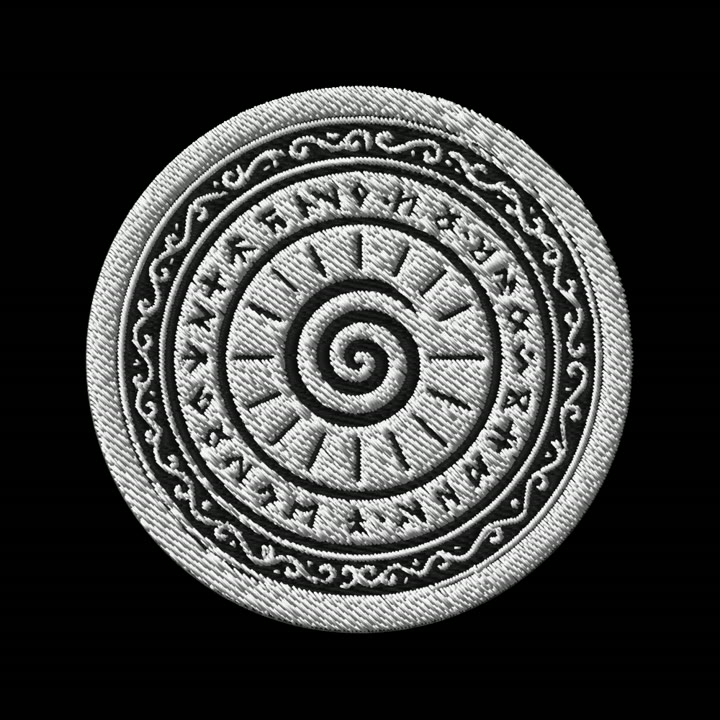
Sigil: The Core Mark
Filed after the fourth account. Beneath the rubble there was no core. Only a hollow too familiar to fear.
Issued to those who went looking for the centre. They found the hollow and kept walking, which the Archive notes without comment.
$17
Take it into custody
Sigil of The Loop
The mark of a record that does not end. It inherits and it recycles, and the register cannot say which of the two it is doing at any given moment.
Held once. Held again. The holder is not told which of those this is.
$17
Take it into custody
Sigil of The Loop -Prime
The variant filed when a Loop is observed from inside it. The Archive keeps both marks and ranks neither.
How many versions of the holder have taken this into custody. The count is kept. It is not shared.
$17
Take it into custody
Sigil of Recursion
The condition of an account citing itself. The register permits it. The register has stopped asking after the reason.
Whether this is being taken or being remembered, the Archive files both under the same number.
$17
Take it into custody
Sigil of Alignment
The condition of a reader and a record facing the same way. Alignment is not agreement. It is the moment the two stop resisting each other, which the Archive notes because it so rarely holds.
The holder is aligned with something. The register does not record with what.
$17
Take it into custody
Sigil of Orientation
Knowing which way the record runs. Orientation is lost far more often than it is taken, and the Archive does not restore it.
Filed with the direction the holder was facing when they stopped being sure.
$17
Take it into custody
Sigil of Directional Field
The pull an entry exerts on whoever is near it. Readers report walking toward a record they did not choose. The field is never measured, only described, and always afterward.
The holder is nearer to something than they were. The Archive does not say nearer to what.
$17
Take it into custody
Sigil of Surge
What a record does when too many read it at once. A Surge is not attention. It is the registry answering back.
Issued to those present. Those present seldom agree afterward on what was answered.
$17
Take it into custody
THE COLOURING LEAVES
Seven volumes of plates, lifted from the Lorebook films and reduced to line so they can be finished by hand.
These are not marks and they are not sold. A leaf is a page the record has finished with; what is done to it afterwards is no longer the Archive’s concern.
Each volume prints one side only, so the reverse of every plate stays blank.
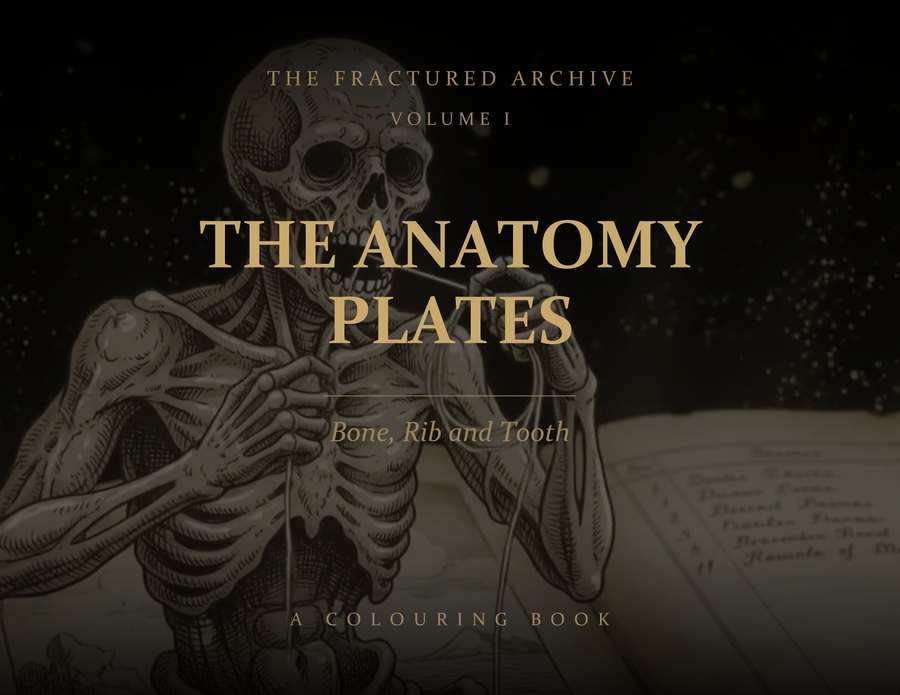
I The Anatomy Plates
Bone, Rib and Tooth
What the ledger keeps when everything soft has gone. Skeletons that read, ribcages that bloom out of the page, a jaw opening on nothing.
20 plates · given, not sold
Take the plates
II Creatures of the Ink
Things That Uncoil
The serpent in the inkwell, the winged thing on the cover, roots boring down past the last stroke. Everything here was drawn and then refused to stay drawn.
16 plates · given, not sold
Take the plates
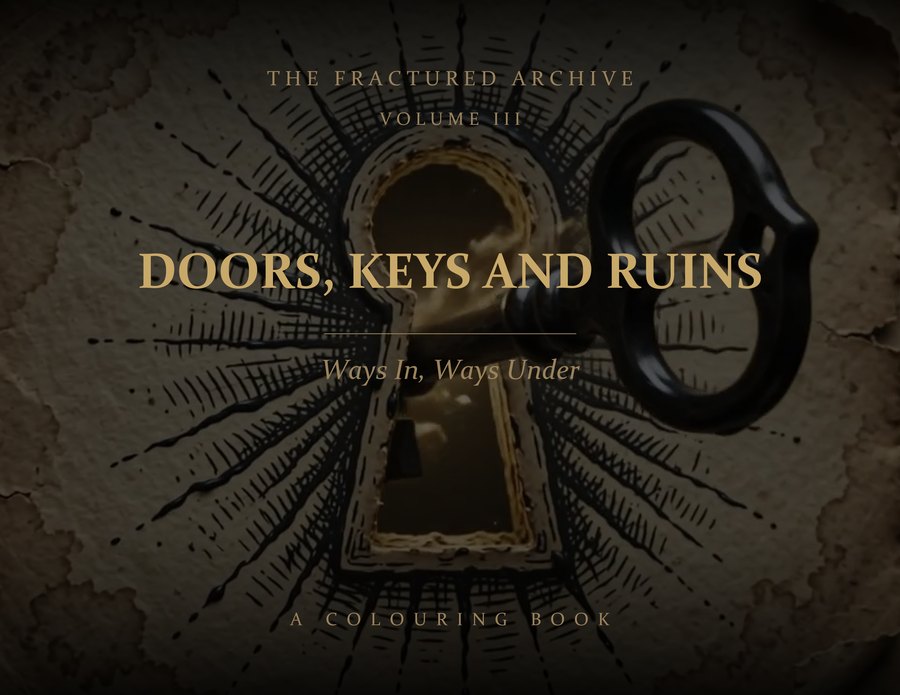
III Doors, Keys and Ruins
Ways In, Ways Under
Thresholds cut into paper, halls of pen-stroke pillars, a keyhole with light behind it. Every one of them opens.
19 plates · given, not sold
Take the plates
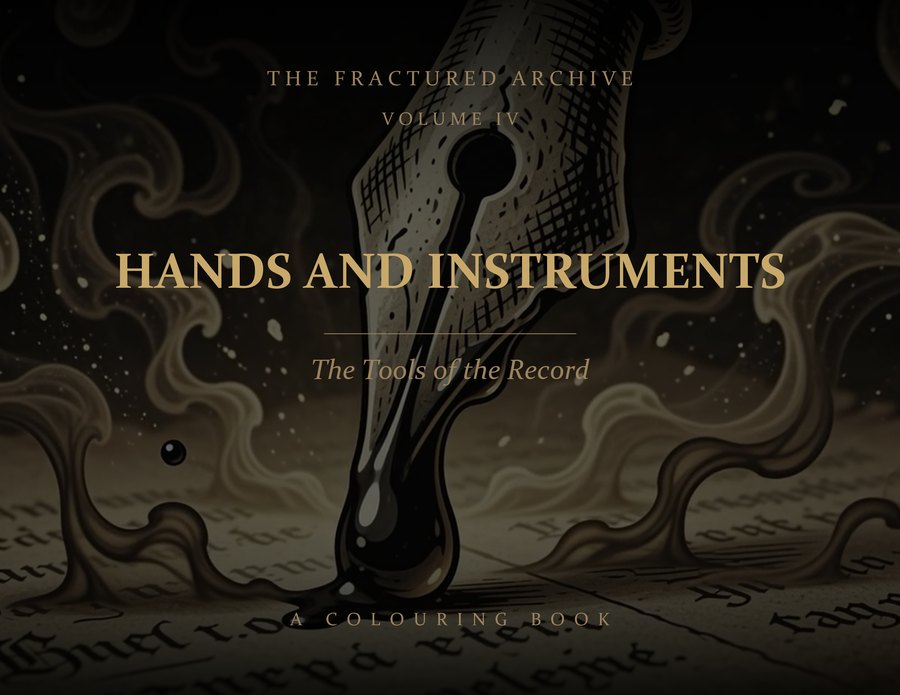
IV Hands and Instruments
The Tools of the Record
Nibs that split, hands that hold a shape they were never taught, chains, seals, and one drop of ink that will not fall.
16 plates · given, not sold
Take the plates
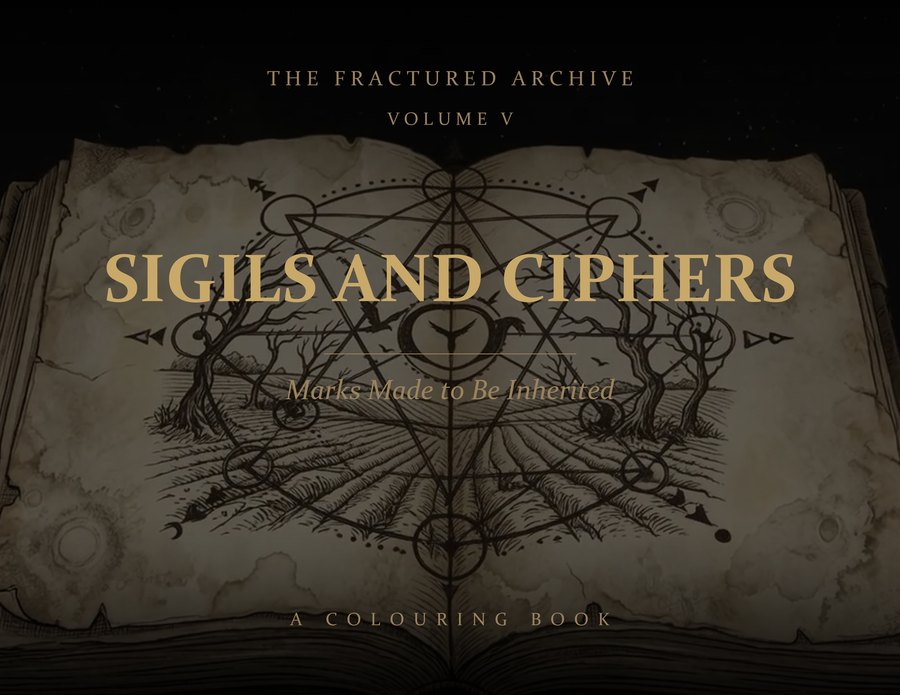
V Sigils and Ciphers
Marks Made to Be Inherited
Wheels, seals, tally columns and diagrams from a system nobody living can read. The most patient pages in the series.
23 plates · given, not sold
Take the plates
VI The Illuminated Leaves
Plates, Borders and Blooms
The ornamental pages: framed panels, reliquary caskets, a rose opening the wrong way. The closest this Archive comes to decoration.
17 plates · given, not sold
Take the plates
VII The Watchers
Figures, Faces and Those Who Read
Hooded readers in a corridor without end, a face surfacing through the crosshatching, one small figure carrying the whole book away.
18 plates · given, not sold
Take the plates